Email:info@goodfuturesolar.com
Tel: +86-371-63966669
Email:info@goodfuturesolar.com
Tel: +86-371-63966669
A single-axis solar tracker is an advanced mounting system that rotates PV modules along a single axis (typically north–south), allowing them to follow the sun from east to west. This intelligent movement significantly increases energy generation compared with fixed-tilt systems, making it a key technology for modern utility-scale solar farms.
For EPCs, project developers, and investors, understanding where trackers excel and how they are built is essential to maximizing ROI.
Single-axis trackers shine in specific project conditions. The scenarios below highlight where they add the most value.
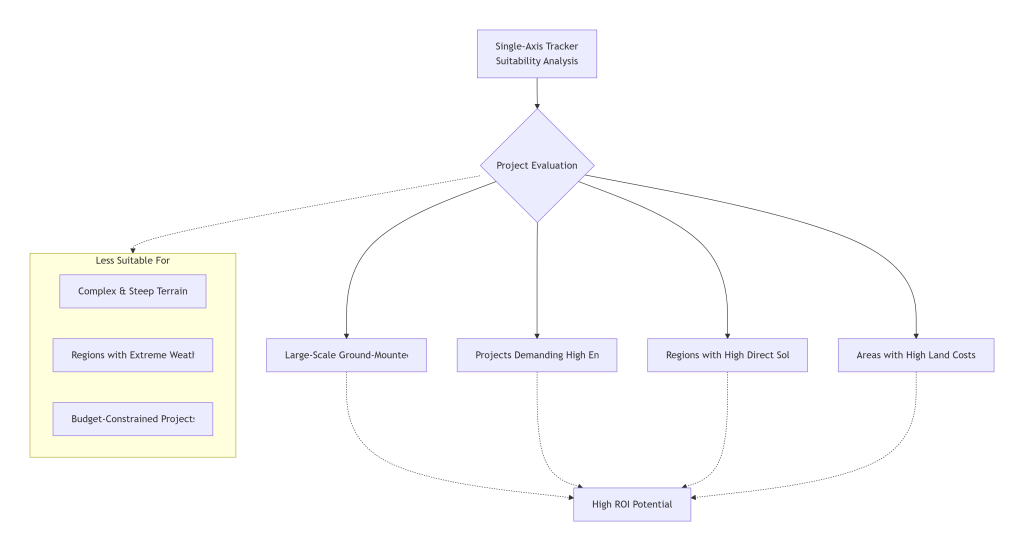
This is the most cost-effective application. On large, flat, or gently sloped sites, economies of scale significantly reduce LCOE.
Trackers typically boost annual production by 15%–25% compared with fixed-tilt systems— directly improving project returns.
Areas with strong DNI—such as the southwestern US, Middle East, and Northern China—benefit most from the “sun-chasing” effect.
By producing more energy per square meter, trackers help maximize output from limited or expensive land.
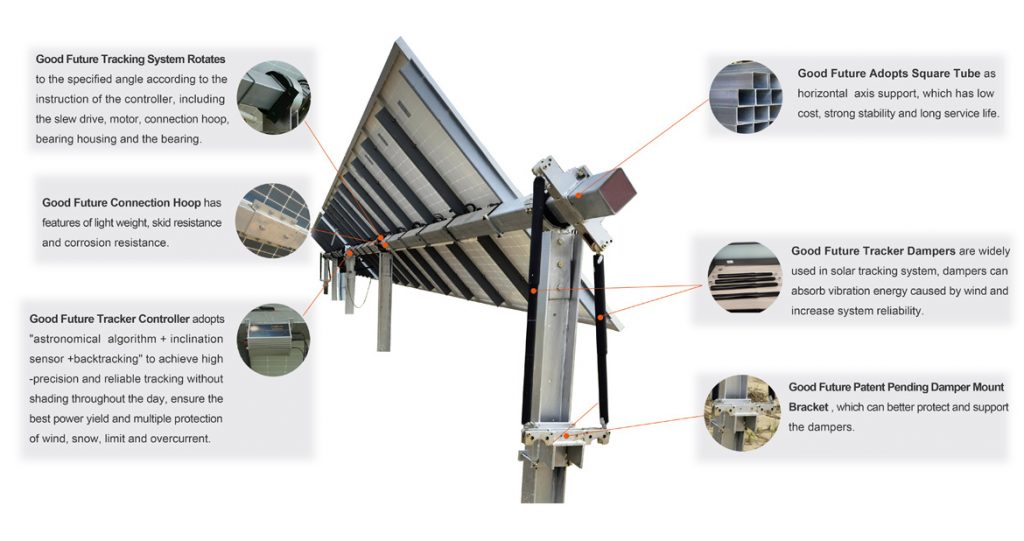
A reliable tracker system integrates structural, mechanical, and intelligent control components. Understanding these elements helps ensure long-term performance and durability.
Torque Tubes:
The backbone of the tracker, transmitting rotational force across the row while supporting wind and snow loads.
Rails & Purlins:
Horizontal members mounted on the torque tube that hold the PV modules.
Rotation Drive Assembly:
Connects the motor to the torque tube to execute precise movement.
Posts (Pylons):
Vertical supports that elevate and stabilize the torque tubes, designed to avoid shading and ensure ground clearance.
Foundations:
Driven piles, concrete piers, or helical piles selected based on soil conditions.
Motor & Actuator:
Provide the mechanical force needed to rotate tracker rows.
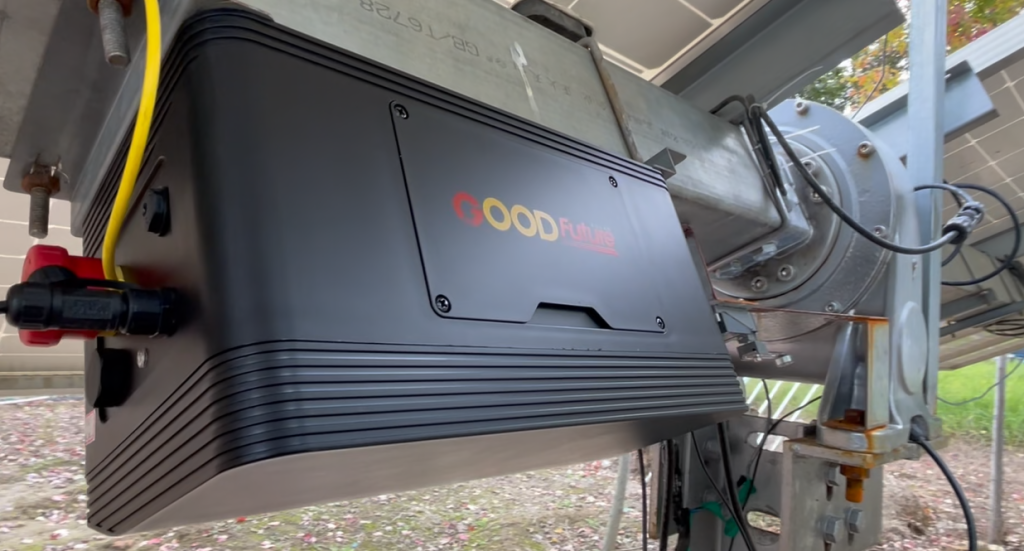
Tracker Controller (SCU):
Weatherproof unit managing one or several rows based on commands and sensor data.
Advanced Tracking Algorithm:
Uses astronomical models and real-time weather inputs to optimize tracking and initiate safety stow modes.
Wind Stow:
Automatically moves modules to a flat, wind-resistant position during high winds.
Snow Stow:
Tilts modules to shed snow more effectively and protect structural integrity.
Backtracking:
Prevents row-to-row shading during mornings and evenings by adjusting angles intelligently.
At GoodFuture New Energy, we deliver more than steel and motors—we provide an intelligent energy optimization platform engineered for long-term value.
Ready to maximize your next solar project’s performance?
Contact GoodFuture today to connect with our expert team.