Email:info@goodfuturesolar.com
Tel: +86-371-63966669
Email:info@goodfuturesolar.com
Tel: +86-371-63966669
In utility-scale solar tracker systems, bearings are more than just components—they are the backbone of structural reliability and long-term performance. While some solutions rely on plastic bearings for lower upfront costs, aluminum bearings are increasingly becoming the industry’s preferred option. Here’s why:
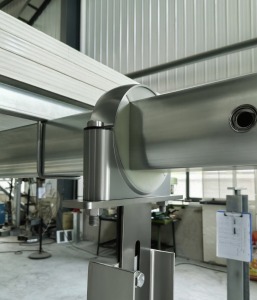
Aluminum alloy bearings offer superior mechanical strength, ensuring stable support for PV modules under dynamic wind and snow loads. Their rigidity and durability help reduce deformation and prolong system life.
Plastic bearings tend to degrade under prolonged exposure to UV radiation and high temperatures, leading to cracking or warping. Aluminum bearings maintain their structural integrity and performance even in desert heat, coastal humidity, and other extreme environments.
Surface-treated aluminum bearings provide excellent resistance to corrosion, reducing the risk of rust and wear over time. This translates into lower maintenance needs and improved system uptime.
Aluminum allows for high-precision machining, which results in better fitment, reduced backlash, and more accurate tracking—critical factors for maximizing solar energy yield.
Though plastic bearings may appear cost-effective initially, they often bring hidden costs:
Deformation due to thermal expansion
Lower load capacity
Shorter service life
Increased maintenance and replacement
These issues can ultimately compromise system performance and increase total lifecycle cost.
At Good Future solar , we design aluminum bearings specifically for the demands of solar tracking. Featuring a lightweight alloy housing and a self-lubricating liner, our bearings combine high load capacity, long-term stability, and minimal maintenance. They are widely applied in tracker systems across various climates and terrain conditions—delivering proven performance, project after project.
Choose reliability. Choose aluminum. Choose GF.